
Why Brake Cooling Is Critical for Classic Mustangs on Track
The 4-piston Kelsey Hayes brakes on early Mustangs are well designed and work very well with the proper pads and brake pressure, however heat can quickly become a killer. The factory 11.3” x .810” rotors do not have a lot of mass to quickly dissipate heat. On street driving, this rarely becomes and issue. When pushing hard on the track, lack of heat dissipation can quickly lead to brake fade, or worse.
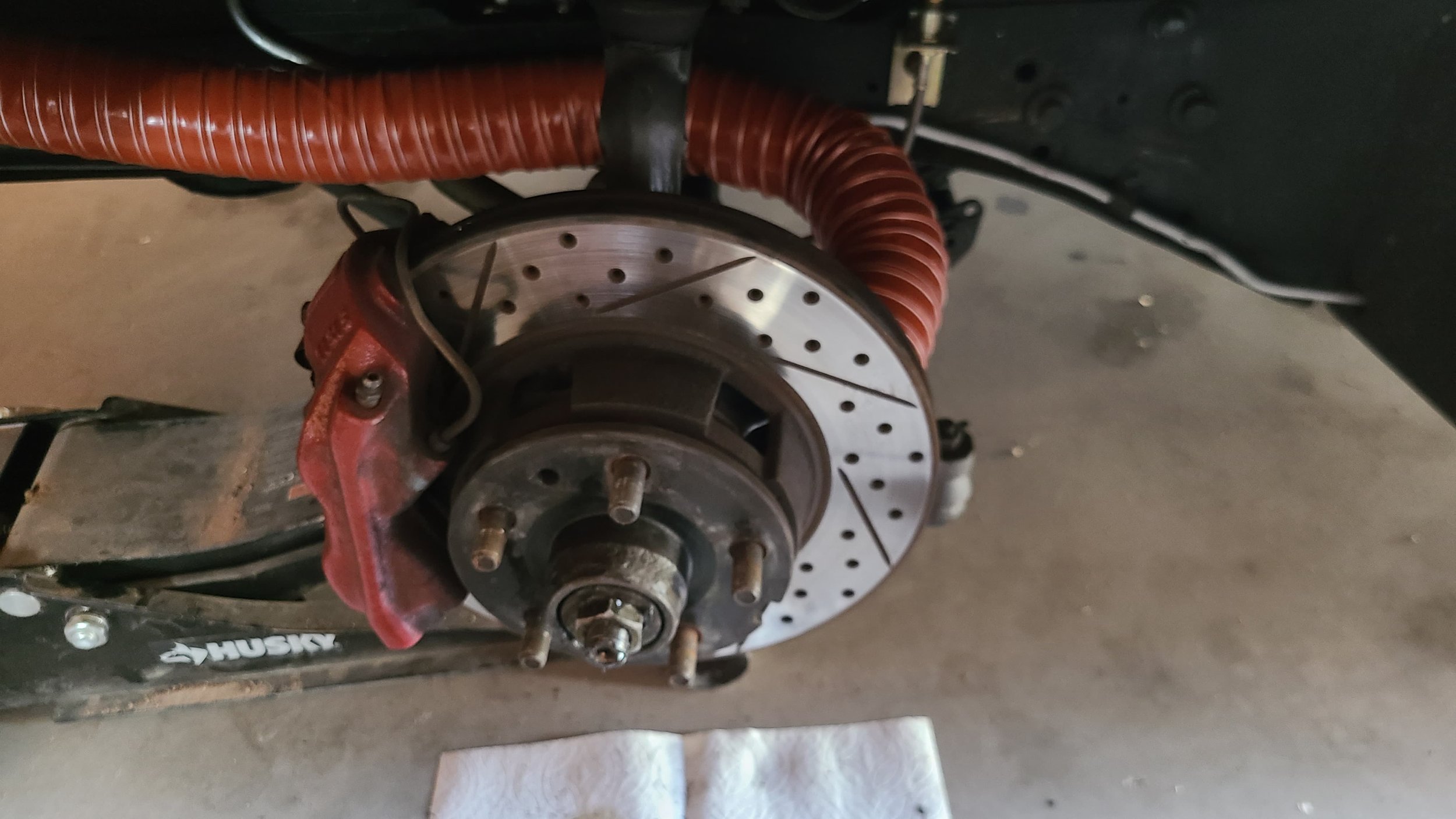
What Happens When Brakes Overheat
As temperatures rise:
Brake pads lose friction
Rotor temps climb
Pedal feel becomes inconsistent
Eventually:
You get brake fade
Why Pads Alone Don’t Fix It
A common response is:
“Just run better pads”
That helps — but only to a point.
Even aggressive compounds will:
Overheat
Lose consistency
Wear faster
You’re treating the symptom, not the cause
The Real Solution: Airflow
Brake cooling works by:
Directing airflow into the rotor center
Using the rotor as a pump to pull air through
This removes heat at the source.
Real-World Scenarios Where Cooling Helps
Track days
Repeated high-speed braking builds heat fast
Canyon / mountain driving
Long downhill sections = sustained braking
Autocross
Short bursts, but frequent heat cycling
Aggressive street driving
Even occasional hard braking can push temps up
The Difference You’ll Feel
With proper cooling:
Braking stays consistent
Fade is reduced or eliminated
Pedal feel is more predictable
It doesn’t make the car stop harder.
It makes it:
stop the same way every time
Final Thought
If you’ve already upgraded:
Pads
Rotors
Calipers
…and still experience fade:
Brake cooling is the missing piece.